

Urine Drug Tests
At Onsite Drug Testing, we supply high-quality urine drug test kits designed for fast, accurate results. All urine drug tests test the main drug groups required under Australian Standards AS4308:2008 and AS4308:2023. These easy-to-use tests deliver clear results in just minutes and require no specialised equipment, making them ideal for workplace drug testing, compliance programs, rehabilitation monitoring, and at-home testing.
Urine drug tests are one of the most widely used methods for drug screening in workplaces, medical settings, and personal testing. Urine testing detects the drug metabolites that remain in the body after drug use, providing a reliable way to identify recent or past substance use across a wide range of drug types.
Our urine drug tests are available in a range of multi-panel formats, allowing you to detect multiple drugs in a single test. Browse our range of urine drug test kits below to find the right product for your workplace or testing program.
Browse our Urine Drug Tests
-
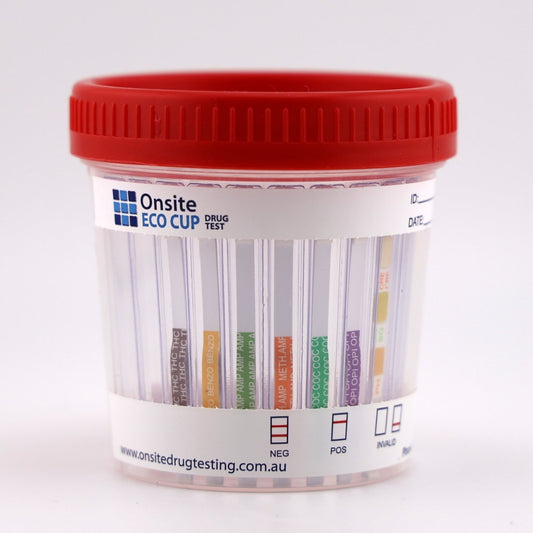
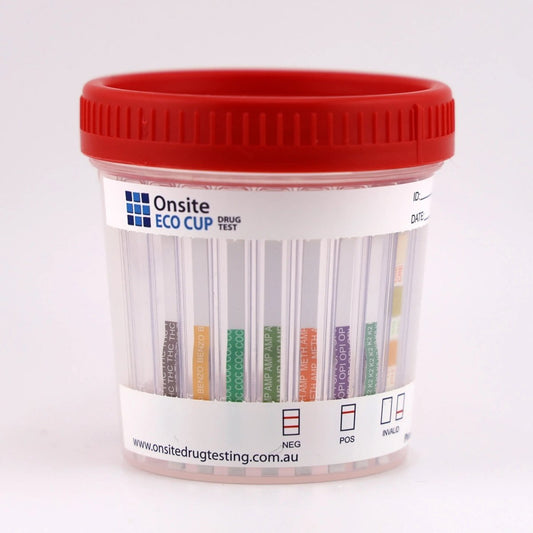
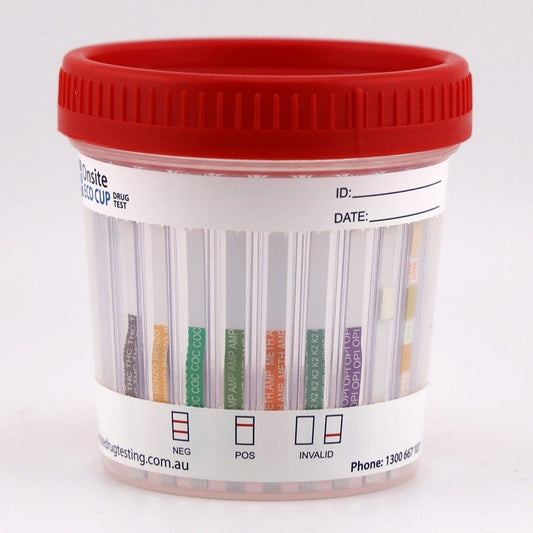
Onsite Eco 6 Advanced Urine Drug Test Cup (OD-066A)
Vendor:Onsite DiagnosticsRegular price From $345.00 AUDRegular priceUnit price $11.50 each -
Onsite Eco 7 Advanced Urine Drug Test Cup Vacuum Lid (OD-070A)
Vendor:Onsite DiagnosticsRegular price From $345.00 AUDRegular priceUnit price $11.50 each -
Onsite Eco 7 Advanced + Alcohol Urine Drug Test Cup (OD-071A)
Vendor:Onsite DiagnosticsRegular price From $370.00 AUDRegular priceUnit price $12.50 each -
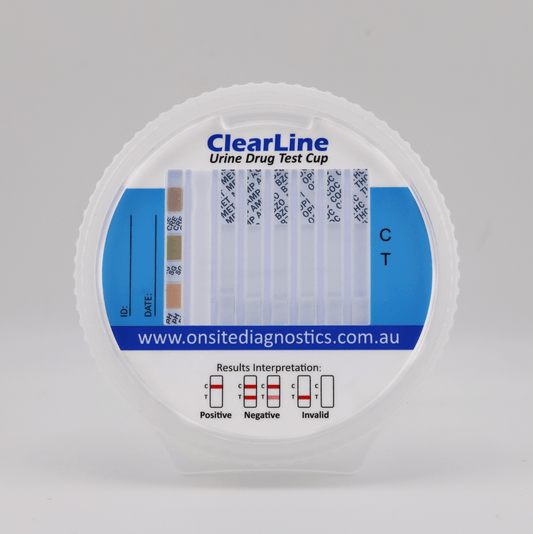
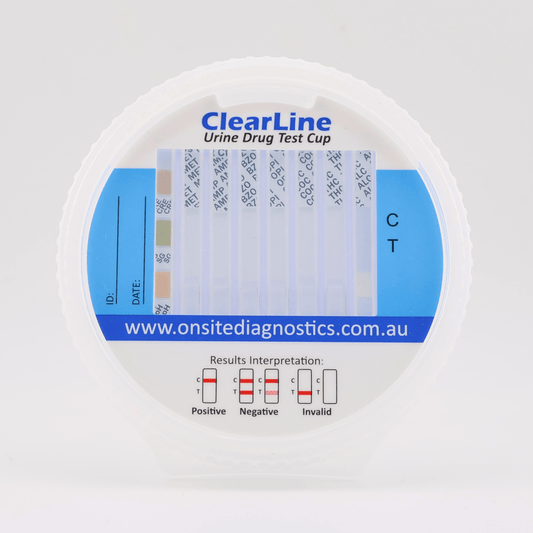
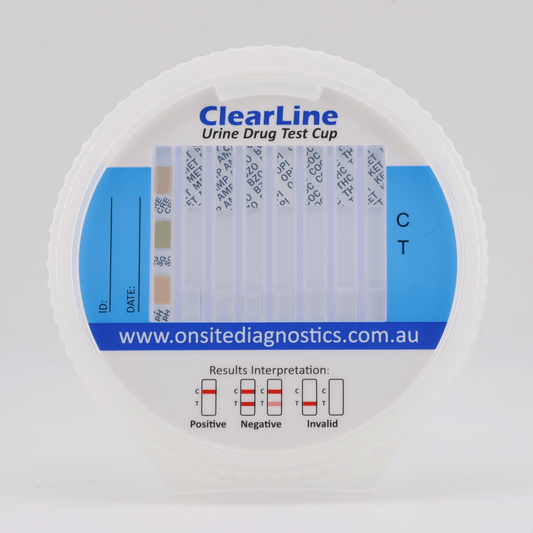
Onsite ClearLine 6 Advanced Urine Drug Test Tilt-Cup (OD-202)
Vendor:Onsite DiagnosticsRegular price From $345.00 AUDRegular priceUnit price $11.50 each -
Onsite ClearLine 6 Advanced + Alcohol Urine Drug Test Tilt-Cup (OD-203)
Vendor:Onsite DiagnosticsRegular price From $365.00 AUDRegular priceUnit price $12.40 each -
Onsite ClearLine 7 Advanced Urine Drug Test Tilt-Cup (OD-204)
Vendor:Onsite DiagnosticsRegular price From $355.00 AUDRegular priceUnit price $12.00 each






Why choose urine drug testing?
Understanding Urine Drug tests
Urine drug tests are considered one of the most reliable methods of drug screening. Most tests use immunoassay screening technology, which detects drug metabolites in the urine when they exceed specific cutoff levels.
These tests are widely used in workplace drug testing, medical settings, and rehabilitation programs due to their accuracy and ability to detect a wide range of substances.
If a test produces a non-negative result, it is typically sent to a certified laboratory for confirmatory testing using advanced analytical techniques such as GC/MS. It is an important step to confirm the results before disciplinary action is taken against an employee.
Urine drug tests generally have a longer detection window than saliva tests because they detect drug metabolites after the body processes the substance.
Typical detection windows include:
- Cannabis (THC): 1–30 days depending on frequency of use
- Amphetamines / Methamphetamines: 1–3 days
- Cocaine: 1–3 days
- Opiates: 1–3 days
- Benzodiazepines: 3–7 days or longer depending on the medication
Detection times can vary depending on factors such as frequency of drug use, metabolism, body mass, and hydration levels. Most substances can be detected in urine for 1–4 days, while
some drugs may remain detectable for longer with heavy use. Eg; Marijuana (THC) can remain detectable for 6 weeks following heavy use.
Urine drug tests can detect a wide range of commonly misused drugs. Many workplace testing programs follow the drug classes outlined in Australian Standard AS4308.
Multi-panel urine drug tests can detect a range of substances, including:
- THC – Marijuana / Cannabis
- AMP – Amphetamines
- MET – Methamphetamine (Ice)
- COC – Cocaine
- OPI – Opiates (Heroin, Morphine, Codeine)
- BZO – Benzodiazepines
- OXY – Oxycodone
- KET - Ketamine
- K2 - Synthetic marijuana
- MDMA – Ecstasy
- MTD – Methadone
Different test panels may detect different drug combinations depending on the test kit. At Onsite Diagnostics we can custom manufacture a test to suit your exact requirements.
Urine drug tests work by detecting drug metabolites present in the urine sample.
When drugs are consumed, the body processes them and produces metabolites that remain detectable in urine for a period of time.
A small urine sample is collected. The test uses immunoassay technology to identify the presence of specific drug metabolites. Results are typically available within 5 minutes, with clear lines indicating either a negative or preliminary positive result.
Urine drug testing is commonly used in workplace safety programs, medical screening, rehabilitation monitoring, and compliance testing due to its reliability and ability to detect multiple substances.
A urine drug test is a straightforward process that involves collecting a urine sample in a sample cup or integrated test device.
The typical process includes:
- The donor provides a urine sample in a collection cup.
- The test device is activated or the test strip is placed in the sample.
- The sample reacts with the test strips inside the device.
- Results appear within 3–5 minutes.
Many modern urine drug test cups also include temperature strips and adulteration indicators to help ensure sample integrity.
Urine drug testing is widely used in workplace safety programs because it can detect drug use over a longer period of time compared with other testing methods.
Employers often use urine testing for:
- Pre-employment drug screening
- Random workplace testing
- Post-incident testing
- Reasonable cause testing
- Rehabilitation or compliance monitoring
Urine drug testing is particularly useful for identifying patterns of drug use rather than just recent impairment.
Yes. Many urine drug tests are available as multi-panel drug tests, which allow several drug groups to be screened from a single urine sample.
Common configurations include:
- 6-panel drug tests
- 7-panel drug tests
- 7-panel drug tests + Alcohol test
Multi-panel tests provide an efficient way to screen for multiple substances quickly and cost-effectively.
Many professional urine drug tests are designed to comply with Australian Standard AS/NZS4308:2023, which outlines the recommended procedures and requirements for urine drug testing in workplaces.
Using tests that meet Australian standards helps ensure reliable screening results and compliance with workplace drug and alcohol policies.
Urine drug tests can sometimes be tampered with through dilution or adulteration, which is why many professional testing programs use integrated sample integrity checks.
Modern urine drug testing devices may include:
- Temperature strips to confirm fresh samples
- Adulteration indicators to detect tampering
- Observed collection procedures in workplace testing programs
These measures help ensure the accuracy and reliability of test results.
All Onsite Diagnostics urine drug tests include adulterant checks for pH, Creatinine and Specific Gravity plus have a temperature indicator to confirm the urine is at body temperature 32-38 degrees.
Most rapid urine drug tests provide results within 3–5 minutes after the sample is applied to the test device. This makes urine testing a practical option for on-site screening in workplaces and clinical settings.
If a non-negative result occurs, a laboratory confirmation test may be required.
Urine drug tests are widely used by a range of organisations and individuals, including:
- Workplace drug testing programs
- Medical clinics and healthcare providers
- Rehabilitation and treatment services
- Government agencies
- Personal or at-home drug testing
Because of their long detection window and ability to screen multiple drugs, urine drug tests remain one of the most widely used drug testing methods worldwide.